



















Opens in a new tab
About Us

We're not here to guess

We’re not just going to show up, run a playbook, and hand you a dashboard. We’re going to get into the guts of your business and figure out what’s actually going on, not what’s easy to measure, but what’s true. If your marketing isn’t working, we’ll find out why. If the problem isn’t your marketing at all, we’ll tell you that too.

Seafoam team member smiling while working on a laptop

What Seafoam is

Seafoam is a small, senior team that operates as the marketing department for mid-market companies that don’t have one, or that have one and know it isn’t doing what it should be doing.

We function as three things at once: the strategic head (CMO), the measurement engine (RevOps), and the execution arm. Three functions, one team, one number every month. The shape of the firm exists because the work, done well, actually requires all three. Most companies in our category buy one or two and skip the third. We don’t.

Illustration of a team dancing together

Your team

Six people. Every one of them expert in their discipline, and every one of them someone you’ll actually talk to if you hire us.

Nikki Bisel

Founder & CEO

Nikki owns the thing Seafoam is built to prove: that marketing is supposed to grow a business, not just keep it busy. The method, the standards, the measure of what’s good enough to ship. If the work isn’t working, that’s on her.

She has more than twenty years in the discipline. The foundational lesson came earlier, in a high school job at a golf course, working for a manager who used slow days differently than most people do. Not to coast, but to do the behind-the-scenes work nobody would ever see. Prepping for the busy stretch before it hit. Getting ahead of the thing that would otherwise catch you off guard. It sounds simple. Most people don’t actually do it.

She carried that instinct into freelance design in her early twenties, where it took on a second shape: when you freelance, the sale, the delivery, the client being happy, and the project actually working aren’t four separate jobs. They’re one. The second you start treating them as separate, you’ve already started losing the client. You just don’t know it yet. Seafoam was built from what she learned doing that.

Her conviction about the discipline is the kind that makes comfortable people uncomfortable: you don’t move the number by staring at it. Outcomes are what happen when the inputs are good. Most of the industry sells traffic, leads, and rankings, and those matter, they’re how you keep score, but nobody wins by watching the scoreboard. She’d rather fix the swing.

The same instinct runs through how she thinks about data. Most companies don’t have a measurement problem. They have a decision problem, and the dashboard is where they go to avoid making it. Add another metric, run another report, feel productive without ever saying out loud: this is the one thing that matters and these others don’t. What she reaches for instead is the opposite, find where the revenue is actually leaking, pick the one thing, and decide. Most growth isn’t hiding in more data. It’s hiding behind a decision nobody wants to make.

Outside of work, she doesn’t carry a phone. No GPS. No screen time at the dinner table. She’s fully in during working hours, screens are a large part of the job, but when she’s home, she’s home. She’ll tell you it’s not a philosophy, just a preference. But it’s also exactly consistent with everything else about how she builds: intentionally, without noise, and for the long run.

  • Personal photo from Nikki Bisel: two kids exploring a red rock canyon
  • Personal photo from Nikki Bisel: hiking at a mountain summit
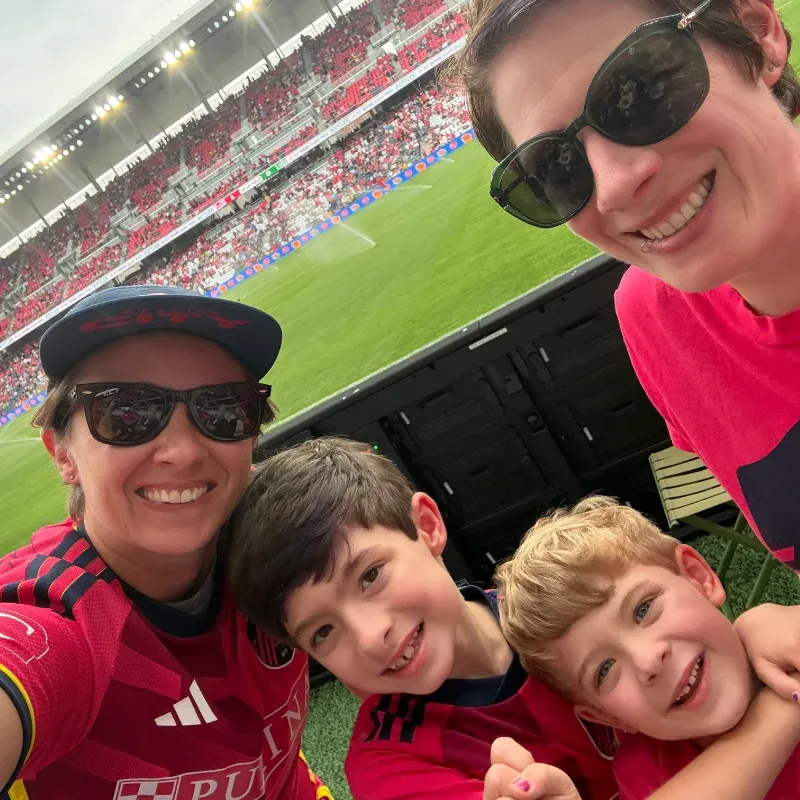
  • Personal photo from Nikki Bisel: family selfie at a soccer stadium
Nikki Bisel laughing with the team in a meeting

When you hire Seafoam, you hire the people on this page

No account managers. No handoffs. The person you meet in the Strategic Alignment Interview is the same person who’s at the annual strategic reset.

This sentence matters more than anything else on the page. Most of the leaders we talk to have been pitched by someone who vanished after signing. They got handed off to a coordinator, then to a junior, then to whoever happened to be free that quarter. By the time they realized what had happened, they were two years and six figures into a relationship that wasn’t the one they signed up for.

That doesn’t happen at Seafoam. The team is small enough that it can’t. The senior people who close the engagement are the senior people who run it, every month, for as long as you’re working with us.

Seafoam started as a marketing agency.

For a long time, we were a good one. Established companies hired us to grow revenue and, by every honest measure, we did. We built campaigns that converted, content that ranked, websites that produced pipeline, ad accounts that brought in real customers at sane CAC. Our clients grew because we’re good at the work in front of us.

But we kept hitting the same ceiling, on engagement after engagement. We were paid to run a slice of the marketing operation, and the slice we owned was almost never the part of the business actually limiting growth. The strategy that should have been pointed at revenue was being set without our input. The measurement system that would have told us what was actually working didn’t exist. The conversations about which customers were worth chasing were happening in rooms we weren’t invited to. We could see the bigger lift sitting right next to the work we were doing, and we couldn’t reach it from the agency seat.

So we changed the firm. Different scope, different rhythm, different accountability. Same craft, deeper. We diagnose first now. We build the measurement layer underneath. We sit in the strategy conversations from the beginning, and we own the number we move every month. The agency we used to be was good at producing results inside a frame somebody else had drawn. The firm we are now produces results because we draw the frame.

What we believe

  • Marketing should answer to revenue. In dollars. Every month. The same way every other line item in your business does.
  • The most profitable thing you can do is make the right customers’ entire experience with you compound over time. Acquisition gets the attention. Retention and expansion are where the money is. The customer who came in clean and stays for years is worth more than three who came in fast and left after one purchase, and most companies don’t price their marketing decisions accordingly.
  • Most marketing failures are diagnosis failures. Treating symptoms instead of causes is why most mid-market companies have been paying for marketing that doesn’t move the business for years.
  • Order matters: Most companies already know what they want to change. The expensive part is doing it in the wrong order. We work out which changes come first and why, then carry them out.
  • Execution is being commoditized. Judgment is not: AI, off-the-shelf tooling, and global execution capacity are eating what marketing agencies used to sell. What’s left worth paying for is clarity, judgment, and accountability.
  • The team that diagnoses is the team that executes. Handoffs are where good work goes to die. We don’t do them.
Seafoam coffee mug next to a laptop