Prepared for: Business Owners, CEOs, Presidents, and Marketing Directors in the St. Louis region
Prepared by: Seafoam Marketing – A St. Louis Marketing Agency
Table of Contents
Introduction
In 2025, the St. Louis marketing landscape has entered a new era defined by rapid digital growth and evolving local consumer behaviors. With deep roots and years of experience in St. Louis, we’ve witnessed firsthand the shift from an era of billboard campaigns and print ads to one dominated by social media, search engines, and data-driven strategy. The COVID-19 pandemic was a pivotal accelerant of this change – forcing businesses in every industry to adapt almost overnight. What follows is an in-depth exploration of how St. Louis businesses are navigating this “new normal” in marketing, balancing the city’s proud local culture with the vast opportunities of the digital world.
Each section of this report delves into a key theme shaping our region’s marketing environment in 2025. You’ll find data from reliable sources, local examples, and insights drawn from years of marketing expertise. Our aim is to provide clarity and guidance – in plain language – on what these trends mean for you as business leaders, and how you can leverage them. From permanent post-pandemic transformations to budget benchmarks, creative economy influences, and the rise of AI, this report serves as a roadmap to the digital horizons ahead for St. Louis marketing.
Let’s begin by looking at how local industries have permanently changed their marketing strategies in the wake of the pandemic.
Post-Pandemic Digital Transformation in St. Louis Industries
The COVID-19 pandemic upended “business as usual” and, in many ways, permanently reshaped how St. Louis companies reach their customers. In the early months of 2020, storefronts went dark and in-person events were canceled, but consumer demand didn’t vanish – it moved online. St. Louis businesses, from retail and restaurants to B2B manufacturers, responded by accelerating their digital transformation at an unprecedented pace. Many of these changes have proven to be lasting. In this section, we examine what that transformation looks like across industries and how our local trends compare to national averages.
The Local-Digital Divide
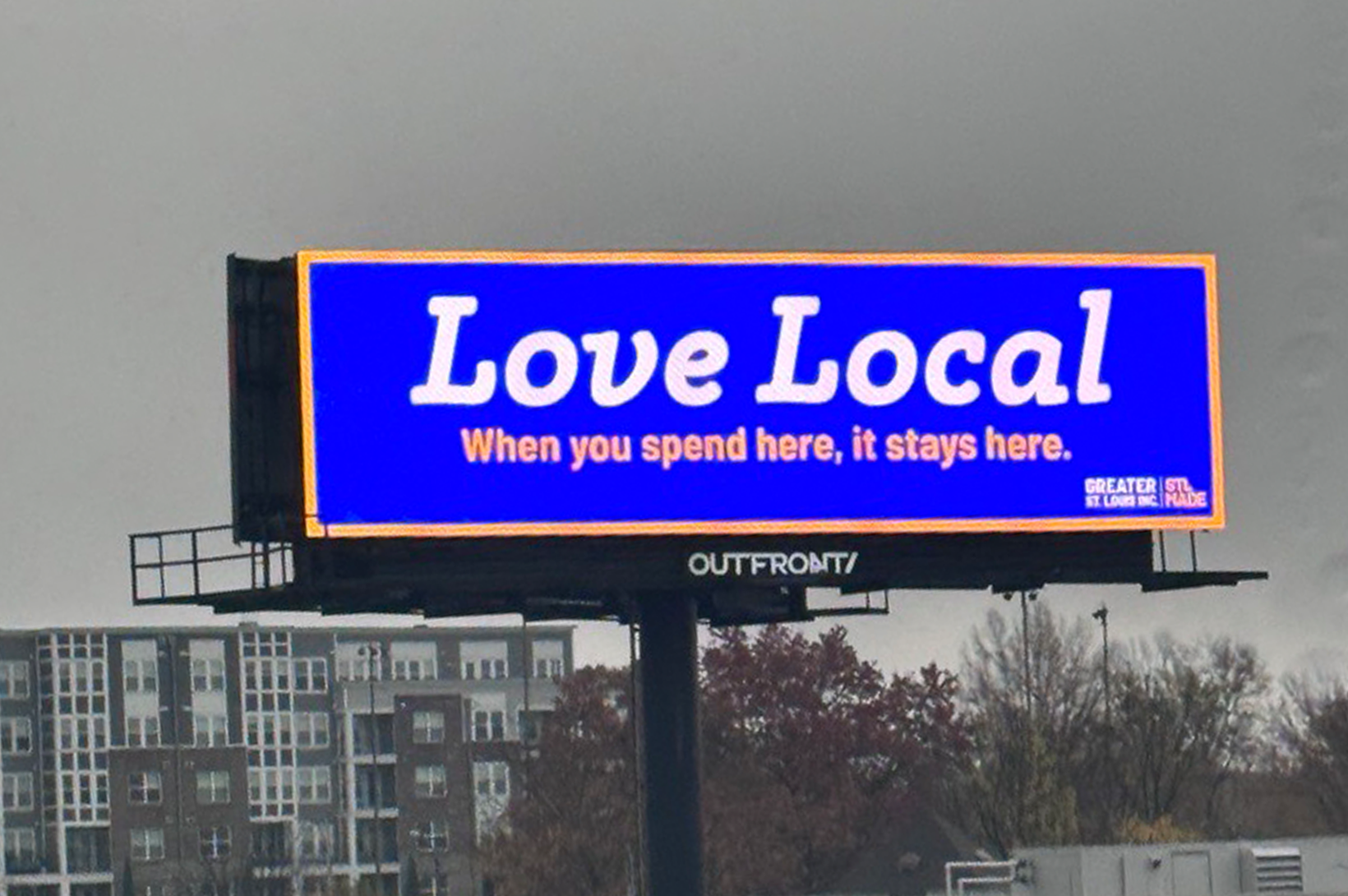
One unique challenge for St. Louis businesses is balancing our strong sense of local community with the vast reach of digital channels. St. Louis has a proud, hyper-local culture – think neighborhood loyalty, Cardinals baseball traditions, 314 Day celebrations – and historically, a lot of marketing here has been very community-centric (sponsoring the local little league, ads on the local radio, flyers at the corner cafe). At the same time, digital marketing lets even a small St. Louis company have a national or global audience at its fingertips. This creates a kind of “local-digital divide”: how do you stay authentic and connected to St. Louis roots while also capitalizing on online scale? In this section, we analyze how businesses are bridging that divide, blending traditional St. Louis marketing approaches with modern digital tactics.
St. Louis Marketing Budget Allocation Benchmarks
One of the most common questions we get from executives is: “How should we be allocating our marketing budget these days, and how do we compare with others in St. Louis?” This section tackles that question by looking at benchmarks for marketing spend. We’ll explore how businesses of different sizes and industries in the St. Louis area are divvying up their marketing dollars across channels, and how that aligns with what’s happening nationally. We’ll also compare the ROI (return on investment) of traditional channels versus digital channels, especially in the context of our local market. The goal is to give you a frame of reference – a check on whether you are under-investing or over-investing in certain areas, and which channels tend to deliver the best bang for the buck in St. Louis.
The Emerging St. Louis Creative Economy
St. Louis has always had a creative undercurrent – from our rich music history (hello, blues and jazz) to a vibrant arts scene and a tradition of scrappy advertising agencies punching above their weight. In 2025, this creative economy is both a source of marketing firepower and a factor influenced by broader trends like talent migration. In this section, we’ll explore how the local creative talent pool is evolving (e.g., are we experiencing a brain drain or a creative influx?), and how St. Louis’s unique cultural assets are influencing brand storytelling. Essentially, we want to understand the people and cultural context behind the marketing – the designers, writers, videographers, and storytellers in St. Louis – and what that means for businesses crafting their brand narratives.
One topic of conversation in recent years has been the “brain drain” – the concern that young creative and technical talent educated in St. Louis might leave for Chicago, Austin, or the coasts. There is some truth to this concern: surveys of students at Washington University and other local colleges found salary and career opportunities are major factors, and some grads do head out for higher-paying jobs elsewhere. However, St. Louis also retains a lot of its talent, and even sees some returnees as quality of life and cost of living here attract those who’ve done the coastal hustle. The net effect on marketing? The talent pool is changing, but not necessarily shrinking drastically. What we do see is a rise in remote work – a St. Louis marketing director might now manage a team that has a mix of in-office local creatives and remote specialists living in other cities. This can actually expand capabilities, as businesses aren’t limited to only local hires for certain cutting-edge skills (for example, a company here could contract a freelance motion graphics designer based in LA for a project, something that’s become common and acceptable).
That said, the creative community in St. Louis has shown resilience and growth in new ways. We have a burgeoning start-up scene and more freelancers/consultants who contribute to marketing projects. It’s not just agencies and in-house departments; it’s also independent creators, many of whom stayed or moved here for the affordable living and are doing national-caliber work from St. Louis. The Regional Arts Commission reported that the arts and culture sector in St. Louis City and County contributes about $868 million in economic impact and over 12,000 jobs. That’s a hefty creative workforce. In fact, statewide, the arts sector here contributes more to the economy than some traditionally big industries like agriculture. Many of those arts jobs overlap with marketing (graphic designers, videographers, PR folks working in nonprofit arts, etc.), which means there’s a solid base of creative professionals in the region.
However, talent migration does affect specific marketing capabilities. For example, if a cluster of experienced digital marketers or creative directors relocate elsewhere, local businesses might feel a gap in seasoned leadership. We’ve observed some St. Louis firms bringing in outside consultants or agencies to fill specialized roles (like high-end UX design or data analytics in marketing) when they can’t find the talent in-house. On the flip side, some local agencies have effectively imported talent by hiring remote or acquiring boutique firms in other cities. So, while the workforce geography has broadened, St. Louis companies still benefit from a collaborative creative network. People might physically be elsewhere, but they’re contributing to St. Louis campaigns.
One trend worth noting is the reverse brain drain – folks who left and came back. We’ve heard anecdotes of creative professionals returning to St. Louis in their 30s or 40s to raise families, bringing with them experiences from big agencies or tech companies on the coasts. These returnees often start new ventures or elevate the local marketing scene with fresh perspectives. The STL 2030 Jobs Plan and initiatives by Greater St. Louis, Inc. aim to foster precisely this: keep graduates here and draw back those who have left. For marketing, this means potentially more diverse and high-caliber talent calling St. Louis home, which can only help businesses seeking creative services.
Marketing isn’t just about tactics – it’s also about telling a story that resonates. St. Louis offers a rich tapestry of cultural assets that brands are increasingly weaving into their storytelling. Let’s consider what makes our city unique and how companies leverage that:
- History and Heritage: St. Louis is the Gateway to the West, home of the 1904 World’s Fair and a city of neighborhoods each with its own story. Brands have tapped into this by aligning themselves with local heritage. For instance, a local brewery might emphasize that it’s carrying forward the city’s great brewing tradition (following in the footsteps of AB InBev – formerly Anheuser-Busch – and the craft explosion). We see restaurants branding themselves around historical cuisines of St. Louis (like reviving old recipes or styles) as a marketing angle. A tech company might metaphorically compare their innovation to the spirit of innovation from the World’s Fair. These narratives create pride and differentiation. They say, we’re not just any company, we’re a St. Louis company, and that means something.
- Arts and Music: The arts scene, from the Muny and Fox Theatre to the contemporary arts in Grand Center, feeds into marketing through collaborations and themes. It’s not unusual for a local ad campaign to feature local musicians, artists, or art locations. For example, a fashion retailer’s lookbook might be shot in front of the vibrant murals in the Grove or with musicians from the St. Louis Symphony, implicitly tying the brand to the city’s creative vibe. The connection can be more direct: companies sponsoring events like the Music at the Intersection festival or using local music in their ads. These efforts not only support the creative community but also imbue marketing with an authentic local flavor that audiences appreciate.
- Sports and Shared Passions: St. Louisans rally around their sports teams (Cardinals, Blues, and now St. Louis CITY SC for soccer). Marketers often tap into this communal passion. We’ve seen brands run campaigns timed with Opening Day at Busch Stadium or play off Blues Stanley Cup fever. Even if it’s not a sports product, tying into what the community cares about can humanize a brand. It might be as simple as a bank running a social media post congratulating Yadier Molina on his retirement, or a coffee shop naming a latte after a star player during playoffs. These cultural touchpoints show the brand is in tune with the community’s zeitgeist.
- Local Celebrations and Quirks: St. Louis has its fun quirks – Toasted Ravioli, gooey butter cake, the “where’d you go to high school?” ritual. Companies often use these in storytelling to connect on an emotional level. For example, a marketing director might write a nostalgic piece for the company blog about childhood memories at the City Museum or The Hill’s Italian grocers, subtly associating the brand with those warm local experiences. In advertising copy or imagery, sprinkling in these references can be like an insider wink to locals. It creates a bond – we share the same city, the same memories.
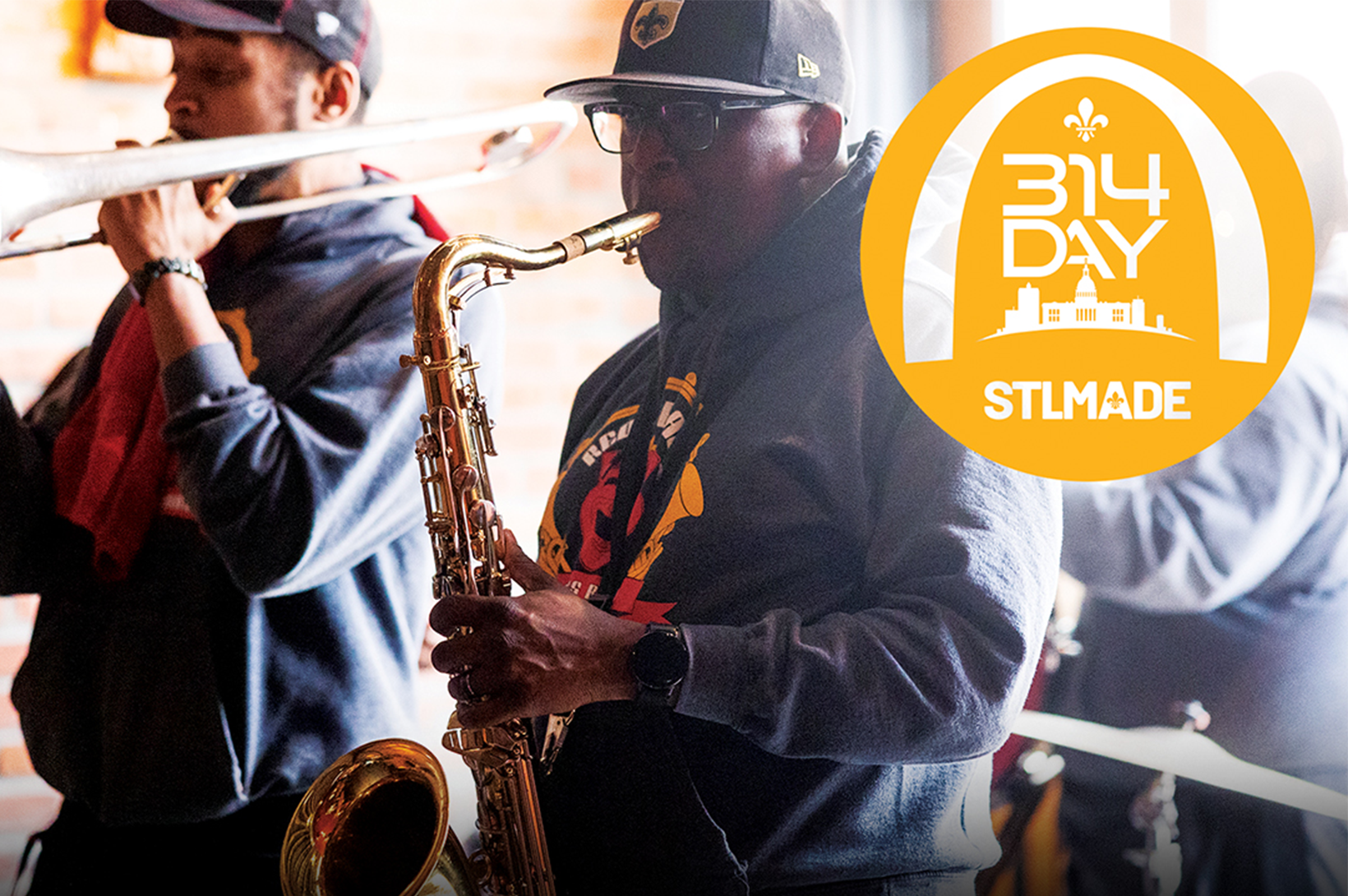
The image above captures a scene from 314 Day, a relatively new tradition where St. Louis celebrates itself every March 14th (3/14, our primary area code). This grassroots celebration has become a marketing opportunity for many local businesses to wave the STL flag. Last year’s 314 Day saw over a 100% increase in the use of the #314Day hashtag on social media – that’s huge engagement. Businesses join in by offering specials (e.g., $3.14 deals), sharing St. Louis facts, or simply expressing gratitude to the community. It’s a prime example of how a unique cultural asset (in this case, our area code and the pride attached to it) is used in brand storytelling. Companies that participate are effectively saying “we’re proud to be from here, and we’re part of this community.” The authenticity of that can strongly boost local customer affinity.
Another aspect of the creative economy is how local talent migration (as discussed earlier) intersects with cultural storytelling. Some marketing teams bring in outside creative perspectives (maybe a New York agency or a bicoastal creative director) – the challenge then is ensuring the story still feels local. Often, involving local artists or cultural experts as collaborators can bridge that gap. For instance, a national brand with a St. Louis market might commission a mural by a St. Louis graffiti artist and build a campaign around that artwork. This way, even if the core marketing strategy comes from outside, the execution has local creative DNA.
Furthermore, diversity in our creative voices is increasingly recognized. St. Louis has a significant African American population with deep cultural contributions (from Chuck Berry to modern visual artists), and a growing immigrant population adding new layers (the Bosnian community, for example, or the burgeoning Hispanic community celebrated in events like Hispanic Heritage Month showcases ). Brands that want to tell an inclusive story of St. Louis are starting to highlight these facets. A local ad campaign might feature a mix of faces and neighborhoods – a shot in North City, another on Cherokee Street, another in Chesterfield – consciously painting a picture of the whole community. This inclusive storytelling is not just socially conscious; it’s effective marketing to broaden appeal and show that the brand “gets” the city in all its variety.
In summary, the emerging creative economy in St. Louis provides both the talent and the inspiration that fuel modern marketing campaigns. While we must be mindful of talent flows (making sure we cultivate and retain creative skills here), St. Louis companies have a treasure trove of cultural material to draw from. Those that harness it – by employing local creatives, aligning with cultural events, and proudly wearing the St. Louis identity – often find their marketing resonates on a deeper level. It moves marketing from just selling a product to telling a story that people want to be a part of. And in an age where consumers (especially younger ones) value authenticity and community, that’s an invaluable advantage.
AI Adoption in St. Louis Marketing
No 2025 marketing report would be complete without discussing artificial intelligence. AI has rapidly moved from a buzzword to a practical toolkit for marketers. In St. Louis, we’re seeing companies of all sizes dabble in AI – from using AI to automate routine tasks to leveraging data-driven insights that inform strategy. This section looks at how widely AI is being adopted in the local marketing scene, differences between big and small businesses in implementation, and some real-world applications tailored to St. Louis market challenges.
Artificial intelligence is no longer the domain of Silicon Valley alone; it’s firmly taking root in the Midwest as well. In fact, 31% of local business decision-makers across the U.S. said they are actively using AI in their companies, and another 29% are testing it, with 13% planning to start in 2024. That means over 70% of local businesses are at least experimenting with AI. St. Louis businesses mirror this national stat pretty closely. We’ve observed a strong curiosity and openness to AI tools among our clients and partners. Local marketing firms and departments have recognized that AI can save time and enhance capabilities – a big deal, especially for smaller teams trying to do more with less.
One striking comparison: AI’s adoption has been blisteringly fast. By August 2024, nearly 40% of working-age Americans reported using generative AI (tools like ChatGPT) either for work or personal use. Researchers point out that this adoption rate, less than two years since generative AI hit mass market, far outpaces how quickly the internet itself was adopted (it took the internet a few more years to hit similar usage). In St. Louis, this general comfort with AI technology is visible. People across industries – not just tech folk – have started to incorporate AI helpers into daily tasks. For instance, a real estate agent might use ChatGPT to help draft listing descriptions; a nonprofit director might use AI to analyze donor data for patterns. In marketing teams, at least one person is likely pushing the envelope, trying out AI-based tools for something.
That said, the implementation rates vary by business size and sector. Larger corporations in St. Louis (think Edward Jones, Purina, etc.) often have formal AI initiatives or vendor solutions integrated into their marketing tech stack. They might use AI for advanced analytics, programmatic ad buying optimization, or personalized content recommendations on their websites. These enterprises have the resources to invest and also the data scale to really benefit from AI insights. On the other hand, small businesses might be using AI in a more ad-hoc way – like using an AI copywriting assistant for their Facebook posts or relying on the AI built into their email marketing software that suggests the best time to send campaigns. Interestingly, surveys (including one by Local Dialog) indicate that small businesses have embraced AI tools quite eagerly – it’s touted as “the small-business world has never embraced a new technology as quickly or enthusiastically as AI.” This is partly because many AI-powered services are affordable or built into tools they already use (e.g., an email platform might introduce an AI subject line generator).
Marketing agencies and firms in St. Louis are definitely on board. Local marketing experts told the St. Louis Business Journal that one of the biggest trends in advertising is indeed the adoption of AI tools. Many agencies have set up internal task forces or committees to explore AI – ensuring they don’t fall behind. A data editor at the Business Journal compiled insights from these experts, underscoring that AI is permeating the industry quickly.
Talking about AI in abstract is one thing; seeing how it’s actually used on the ground in St. Louis marketing is another. Let’s dive into some practical applications and examples:
- Content Creation and Editing: A lot of day-to-day marketing work involves writing and design – areas where AI can assist. Local agencies mention using AI for “tactical, small things” in content creation. For instance, an AI tool might be used to resize and format images automatically for different social media specs (saving a graphic designer a bunch of repetitive work). Or a copywriter might use an AI writing assistant to generate a first draft of a blog post or to brainstorm headline variations. However, there’s caution too – as one St. Louis content director noted, the outputs of generative AI can be haphazard and lack the nuanced accuracy needed for some clients’ content. So they treat AI as a junior assistant rather than an autonomous creator. We find this approach common: AI does the rough work; human experts refine and fact-check, especially when content requires a genuine St. Louis touch or technical precision.
- Research and Insights: AI is excellent at sifting through data. Marketing teams are using it to analyze customer data, web analytics, and even market research. For example, a local retail chain could feed sales data into an AI system to find patterns – perhaps discovering that certain products sell better in certain neighborhoods, which then informs localized marketing. One St. Louis agency president shared that they started using AI for new business outreach – specifically for list development, content development, and background research on prospects, tasks that are time-consuming. AI made that process more efficient, pulling together info on potential clients and even drafting personalized outreach content. This allows their team to focus more on strategy and less on slogging through Google searches or LinkedIn profiles.
- Personalization and Customer Experience: Nationally, personalization is a big trend – tailoring marketing messages to individuals. AI makes this scalable. In St. Louis, companies with robust customer databases (like financial services or healthcare providers) are beginning to use AI to segment and personalize communications. For example, an insurer might use an AI model to predict which customers are interested in a new product, then only send marketing about that product to those customers, increasing relevance (and conversion) compared to a mass blast. On websites, AI-driven chatbots are increasingly common for local businesses. Go to a bank’s website or a university’s admissions page, and you’re likely to encounter a chatbot that can answer FAQs or help direct you – that’s AI quietly improving customer service and freeing staff for complex inquiries.
- Advertising and Media Buying: AI is at work behind the scenes in digital advertising. Platforms like Google and Facebook use machine learning to optimize ad delivery – many St. Louis marketing advertisers just set their targets and budgets, and the algorithms do the heavy lifting of who sees what ad when. Additionally, some larger advertisers use programmatic advertising platforms that automatically buy and place ads across the web to reach specific audiences at optimal times, decisions driven by AI analysis of huge data sets. The result is often better ROI (for instance, lower cost per click or per lead) without human micromanagement. Small businesses benefit too, even if they don’t realize it – e.g., a local restaurant using a Google Ads smart campaign is leveraging AI without needing any expertise.
- AI in Retail Experiments: One very visual example of AI in local business was Schnuck Markets’ pilot of AI-powered shopping carts. Schnucks, a major grocery chain headquartered in St. Louis, tested smart carts that can track items as customers shop. These carts (developed by an AI tech partner) aim to streamline the checkout process. While this is more of an operational use of AI than a marketing tactic, it has marketing implications: Schnucks positions itself as an innovative, customer-friendly brand. Deploying such technology can be a marketing point in itself (“shop with our new smart carts and skip the line!”). It also generates loads of data on how people shop, which can inform store layouts and personalized promotions.
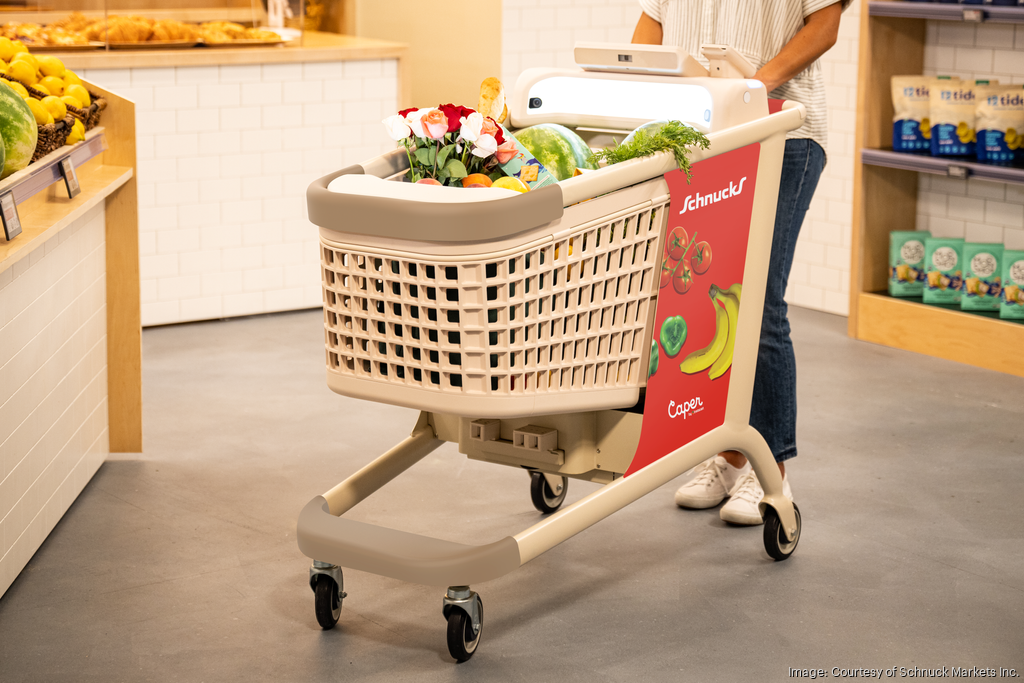
Even grocery shopping is getting an AI assist in St. Louis. Schnuck Markets Inc. piloted AI-powered “smart carts” (example shown above) that automatically detect items as customers shop, aiming to make checkout frictionless. Innovations like this show how local businesses are embracing AI not just in marketing communications, but in the customer experience itself. Image courtesy of Schnuck Markets Inc.
- AI for Efficiency in Agencies: Many St. Louis marketing agencies, including ours, use AI to improve internal processes. This might include using AI tools for project management (forecasting workloads, timelines), generating reports (automatically interpreting campaign data and creating plain-language summaries), or even for coding (like a web developer using an AI coding assistant to troubleshoot a website issue faster). One local firm created a dedicated R&D budget for team members to experiment with AI tools, recognizing that investing time in learning these tools can pay off in improved service for clients. The mindset is that AI can handle some of the grunt work, enabling creative professionals to spend more time on strategy, big ideas, and personal connections with clients – the areas where human touch is irreplaceable.
- Addressing Local Market Challenges: St. Louis has its specific marketing challenges – for instance, a very diverse metro area with urban, suburban, and rural mix; or the need for economic inclusion (reaching consumers across varying income levels and digital access). AI can help by finding the best communication channels for different segments or optimizing budget spend geographically. A tourism marketing group, for example, could use AI to analyze which out-of-town visitor demographics are most interested in St. Louis (sports fans? history buffs? foodies?) and then tailor their digital marketing to target lookalike audiences in those categories across the country. Similarly, a local nonprofit aiming to spread a public service message could use AI-driven predictive modeling to identify which zip codes might need more attention and via what medium (social ads vs. mailers, etc.), making the outreach more efficient and impactful.
Of course, with all these opportunities, there are also some healthy concerns and limitations that St. Louis marketing professionals are navigating. One concern is maintaining authenticity and the human touch, something especially important to local audiences. Over-reliance on AI for customer-facing content can lead to bland or off-key messaging. So, many treat AI outputs as drafts, with humans editing to ensure the St. Louis voice or brand voice is correct. Data privacy is another consideration – using AI on customer data means ensuring compliance with privacy rules and ethical use of data. Larger firms have legal teams for this; smaller ones err on the side of caution and stick to using AI for non-sensitive tasks or anonymized data analysis.
In terms of current implementation rates: by now, in late 2024 into 2025, it’s safe to say that the majority of St. Louis marketing departments have at least one AI-driven feature or tool in regular use. It might be as simple as the automated email scheduling in Mailchimp or as advanced as an AI-based content optimization platform – but it’s there, quietly boosting productivity. The enthusiasm is there too; roughly 77% of local business leaders are positive about AI’s impact on their industries, which suggests adoption will keep rising. The practical, Midwest mindset of our region means we’re using AI not for hype, but where it truly adds value.
One might recall how previous tech waves took time to penetrate the Heartland – but AI’s value proposition of “do more with less” resonates strongly in a city known for its pragmatic innovation (after all, this is the city that built the Gateway Arch, a feat of engineering with Midwestern grit). So, St. Louis is quietly becoming an AI adopter in its own right. We’re not writing academic AI research papers here (leave that to the coasts), but we are applying the technology in meaningful ways. For businesses, the takeaway is clear: AI is here to stay in marketing, and those who embrace it thoughtfully will gain a competitive edge. Whether it’s through faster content creation, smarter ad spending, or better customer insights, AI can help even a local underdog compete with larger rivals. And in a market like St. Louis, where community and connection matter, freeing up human marketers to focus on strategy and relationships – while AI handles the tedious bits – is a winning formula.
Conclusion
The St. Louis marketing landscape of 2025 is a dynamic blend of old and new, local and global, human and AI. We’ve traversed through how the pandemic permanently altered marketing strategies, catapulting even the most traditional businesses into digital channels. We examined the art of balancing tight-knit community marketing with the boundless reach of online platforms – a balance many St. Louis businesses are mastering through integrated campaigns that feel personal yet scale broadly. We dissected where the marketing dollars are flowing, noting the decisive tilt toward digital spend and the superior ROI those channels tend to deliver, especially when leveraged with the creativity and authenticity that characterize successful St. Louis campaigns. We also celebrated the creative economy that underpins our marketing efforts – the people and cultural narratives that give St. Louis marketing its soul – while acknowledging the importance of nurturing and retaining talent to keep that engine running. And finally, we peered into the fast-emerging world of AI in marketing, seeing how local firms are using it pragmatically to work smarter and meet the evolving expectations of consumers.
A few key takeaways for business leaders emerge from this report:
- Digital is Non-Negotiable: The digital transformation is here to stay. Consumers have grown accustomed to the convenience and personalization it offers. St. Louis businesses that invested in robust digital marketing during the pandemic are reaping the rewards, and those late to the game should catch up fast. This doesn’t mean abandoning all traditional methods, but it does mean ensuring your website, social media, search presence, and online customer experience are as strong as your in-person handshake.
- Stay Local, Even as You Go Digital: The local-digital divide can be bridged with a thoughtful approach. Use the rich tapestry of St. Louis culture to inform your content and campaigns. Engage with community events and translate that engagement online. Customers here love to see their city reflected in marketing – it creates trust and goodwill. Being digital-first doesn’t mean losing your local identity; if anything, it gives you new ways to express it.
- Mind Your Marketing Mix: Regularly revisit your budget allocations. The benchmarks suggest more dollars shifting to digital, but the right mix depends on your audience. Track ROI from all channels – if a traditional channel still works for you, great, but be sure it’s pulling its weight. Embrace the measurability of digital to keep optimizing. The data is clear that channels like email, social, and content marketing can drive tremendous returns, so ensure those areas are well-funded and well-executed.
- Leverage the Creative Ecosystem: St. Louis has a wealth of creative talent and a unique story. Collaborate with local creatives, be it agencies, freelancers, or artists, to craft campaigns that stand out. Invest in your team’s development to keep skills here. Maybe consider partnerships with local universities or coding bootcamps to create a pipeline of digital marketing talent. The stronger our creative community, the more innovative and resonant our marketing can be.
- Adopt AI Thoughtfully: Don’t fear artificial intelligence; figure out how to harness it for your needs. Start small – maybe use an AI tool to analyze last quarter’s marketing results or to draft some ad copy variations. Experiment, as many others are doing, and find the 10-20% efficiency gains here and there. Those add up. But also set guidelines so that AI is a help, not a hindrance – maintain human oversight to keep messages on-brand and empathetic. Think of AI as your new intern or assistant: capable, quick, but needing direction from your seasoned perspective.
As we navigate this landscape, one thing remains clear: the fundamentals of good marketing still apply. Know your audience, offer genuine value, tell a compelling story, and build relationships. The channels and tools have evolved – and will continue to evolve – but these principles are our north star. St. Louis companies that adhere to them, while adapting to change, are finding success. A local business that responds to an online customer inquiry with the same care as if that person walked into the store is going to win fans. A CEO who allocates budget not just to the trendiest tactic, but to what aligns with their strategy and customer behavior, is going to see results.
Seafoam Media has been privileged to ride the waves of change in marketing over the decades, from the rise of the internet to the mobile revolution to now AI and beyond. Through it all, our mission has been to guide businesses with expertise and empathy – cutting through hype, focusing on clarity and results. We hope this report has armed you with knowledge and insight that feels actionable and relevant. The 2025 horizon is bright with opportunity for those willing to innovate and stay true to their brand’s character.
In closing, remember that St. Louis’ marketing landscape is as rich and robust as the city itself. It’s a landscape shaped by resilience (forged in post-pandemic adaptation), by community spirit (the glue that binds local loyalty), by creativity (the spark that makes campaigns memorable), and by innovation (the engine propelling us forward). As you chart your course in this landscape, lean on those strengths. Embrace the digital future, but bring your St. Louis values with you. In doing so, you’ll not only achieve greater marketing success – you’ll strengthen the bond between your business and the community it serves. And that is a horizon worth aiming for.