There’s a particular kind of frustration that keeps product-driven founders up at night. You’ve built something genuinely good — quality materials, real craftsmanship, actual care baked into every unit — and somehow, when people land on your website, none of that comes through. The digital experience doesn’t match the physical one.
That’s the gap. And it’s more common than most business owners realize.
GameDay Neons came to us with exactly this problem. Their products — handmade neon signs rooted in sports fandom and American craftsmanship — were already landing partnerships with names like USSSA and FanDuel. The product was proven. But the brand and website weren’t keeping up. What they had online didn’t tell the story of what they actually made, or why it mattered.
Here’s what we learned working through it — and why the underlying pattern applies to a lot more than neon signs.
The Real Problem Isn’t Always What You Think It Is
When a company says “we need a new website,” our first instinct is to ask why. Not because the answer is always surprising, but because the real issue is usually a layer or two deeper than what surfaces first.
For GDN, the immediate pain was clear: their site didn’t differentiate them from cheaper overseas competitors. Visitors couldn’t quickly understand the customization options, the production quality, or what it actually feels like to order from a company that makes things by hand in St. Louis.
But the deeper issue was structural. GDN serves different audiences — individual fans buying ready-to-order pieces, organizations commissioning custom work, and partners exploring larger-scale collaborations. The existing experience treated all of them the same. That’s not a design problem. It’s a strategy problem that shows up in design.
Brand First. Always.
We didn’t start with wireframes. We started with a workshop. Mission, values, buyer personas, brand persona — the foundational work that tells you what to build before you build it.
What came out of that process was a sharper picture of what GDN’s customers actually care about. Not neon signs in the abstract. Pride. Identity. The emotional weight of fandom. The difference between something mass-produced and something someone made with their hands. Those aren’t product features. They’re brand truths. And once you name them, every downstream decision — from site architecture to product copy to visual tone — gets easier.
We refreshed the logo and visual identity to feel more modern and credible without losing the energy that makes sports fandom fun. The brand needed to feel legitimate and trustworthy, because that’s what separates a company worth paying more for from one that just costs more.
Designing for How People Actually Buy
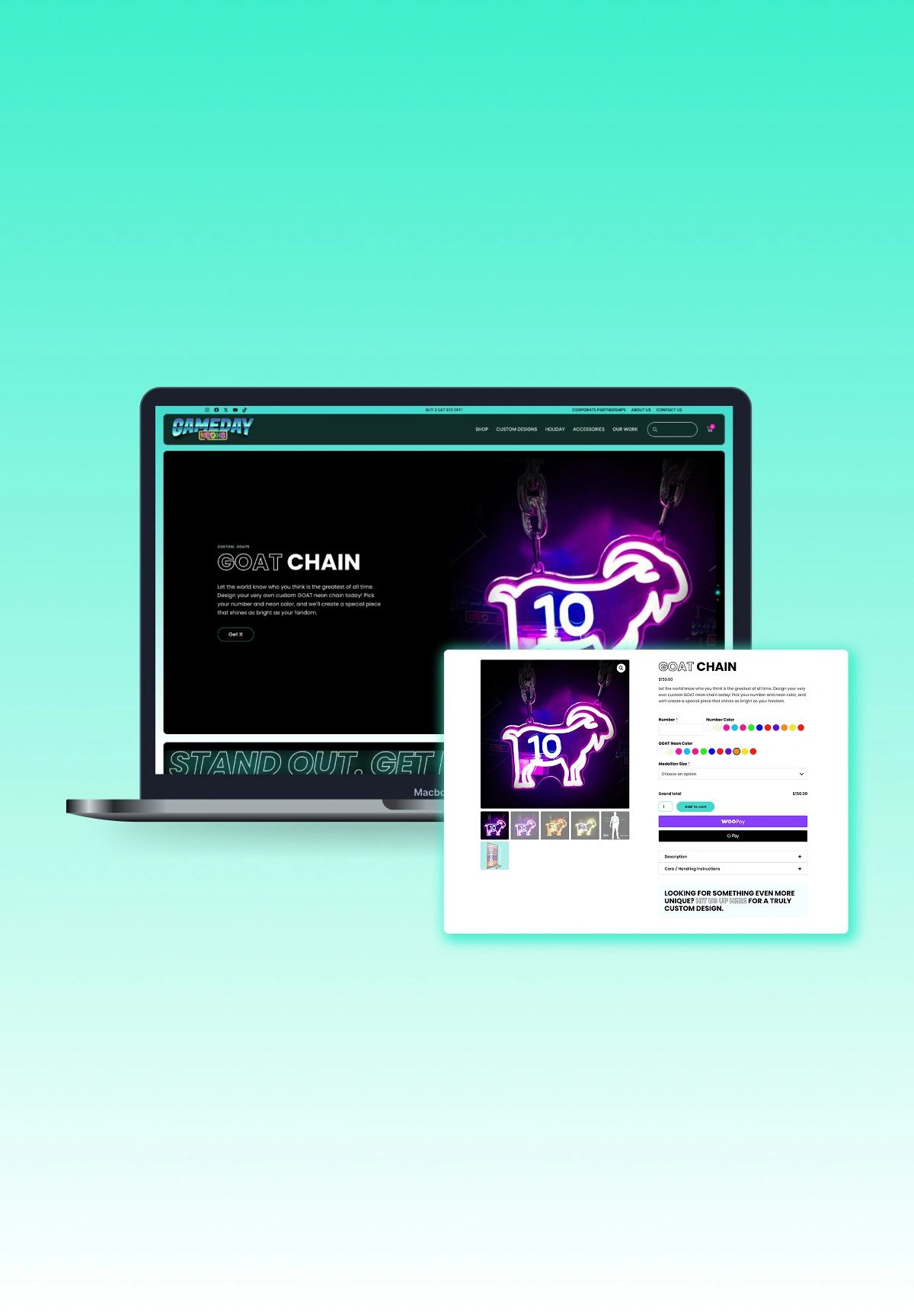
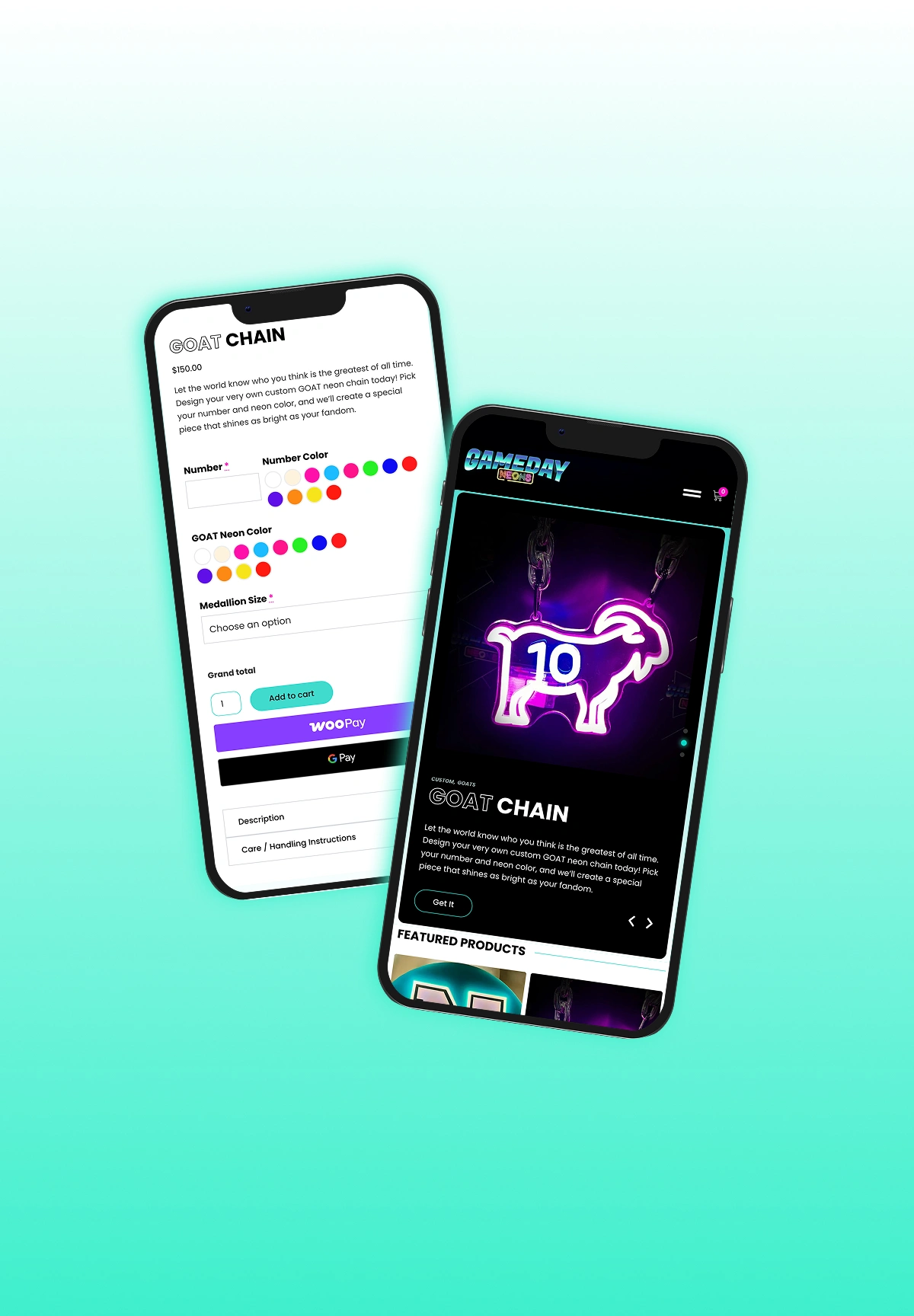
With the brand work in place, we rebuilt the website around customer experience — specifically, around the way different buyers actually move through a purchase decision.
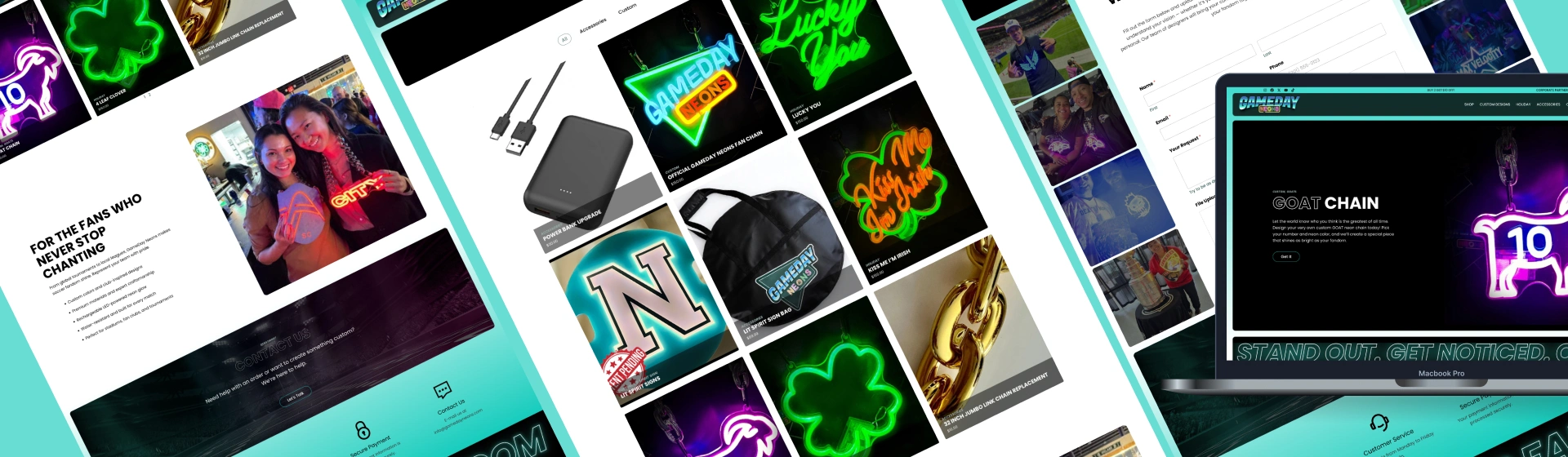
The new site structure clearly separates custom products from ready-to-order options. That sounds simple, but it’s the kind of clarity that collapses when you haven’t done the strategic work first. We expanded the copy throughout the site to provide real context: how products are made, what customization looks like in practice, and why GDN’s approach is worth the investment. Every page was built to reduce friction and answer questions before they become objections.
We also designed the site with flexibility at its core. A growing product company can’t afford to rebuild every time they add a new SKU or respond to a new market opportunity. The system needed to scale without starting over. So that’s what we built.
What Actually Happened
The results backed up the approach:
- 73.92% increase in website visitors — more people finding the brand, largely because the site now communicates clearly enough to earn and retain attention.
- 38% increase in user engagement — visitors are spending more time exploring, which means the content is doing its job.
- 44% increase in conversions — the metric that matters most. More people going from browsing to buying.
Beyond the numbers, GDN now has a brand identity that positions them as a professional, credible company — not just another vendor in a crowded ecommerce space. They have a customer-first website with clear navigation, intentional structure, and the kind of expanded storytelling that builds trust before a purchase ever happens. And they have room to grow without outgrowing their systems.
The Takeaway for Every Product-Driven Business
Here’s the pattern worth paying attention to: when a company makes something genuinely good but struggles to grow, the bottleneck is almost never the product. It’s the gap between what the product is and what the brand communicates.
Closing that gap isn’t a cosmetic exercise. It’s not about prettier photos or a sleeker logo, though those things can help. It’s about doing the strategic work to understand what your customers actually value, then building every touchpoint — from first impression to post-purchase — around that understanding.
Your product can be exceptional. But if the experience of finding it, learning about it, and buying it doesn’t reflect that quality, you’re leaving money and loyalty on the table.
GameDay Neons had the product. We helped them build the brand and experience to match. That’s the work.
Curious whether your brand is keeping up with your product? Let’s talk about it.