
Most companies don’t have a marketing problem. They have a sequence problem.
They’re spending money on ads before they know who their best customer actually is. They’re redesigning their website before they understand why visitors aren’t converting. They’re investing in SEO, email, social, all reasonable tactics, without ever asking whether the brand promise and the customer experience are actually aligned.
It’s not that these things don’t matter. They matter a lot. But doing them first is like renovating rooms in a house before you’ve checked the foundation. You can make it look great. It still won’t hold.
Why Companies Skip Strategy
Nobody wakes up and decides to waste money on marketing. The sequence problem usually shows up for one of three reasons.
The first is urgency. Something feels stale or broken, traffic is flat, leads are drying up, a competitor just launched a slick new site, and the instinct is to do something. Build a new website. Run a campaign. The pressure to act creates motion, but motion isn’t the same as progress.
The second is familiarity. Most business owners have bought tactics before. They know what a website redesign looks like. They know what an ad campaign costs. Strategy feels abstract by comparison, harder to scope, harder to picture, harder to point at and say “that’s what I bought.” So they skip it. Not because they don’t value it, but because the path from strategy to outcome isn’t as obvious as the path from “new website” to “new website.”
The third, and this one’s the quietest, is that looking honestly at the full customer experience can be uncomfortable. It might surface that the sales process isn’t matching the brand’s promises. It might reveal that the customers you’re spending the most to acquire aren’t actually your most profitable ones. Strategy work doesn’t just tell you what to build. It tells you what’s not working. And sometimes that’s a harder conversation than “pick a color palette.”
What “Start With Strategy” Actually Means
When we say start with strategy, we don’t mean sit in a room and theorize. We mean do the diagnostic work that makes every dollar after it smarter.
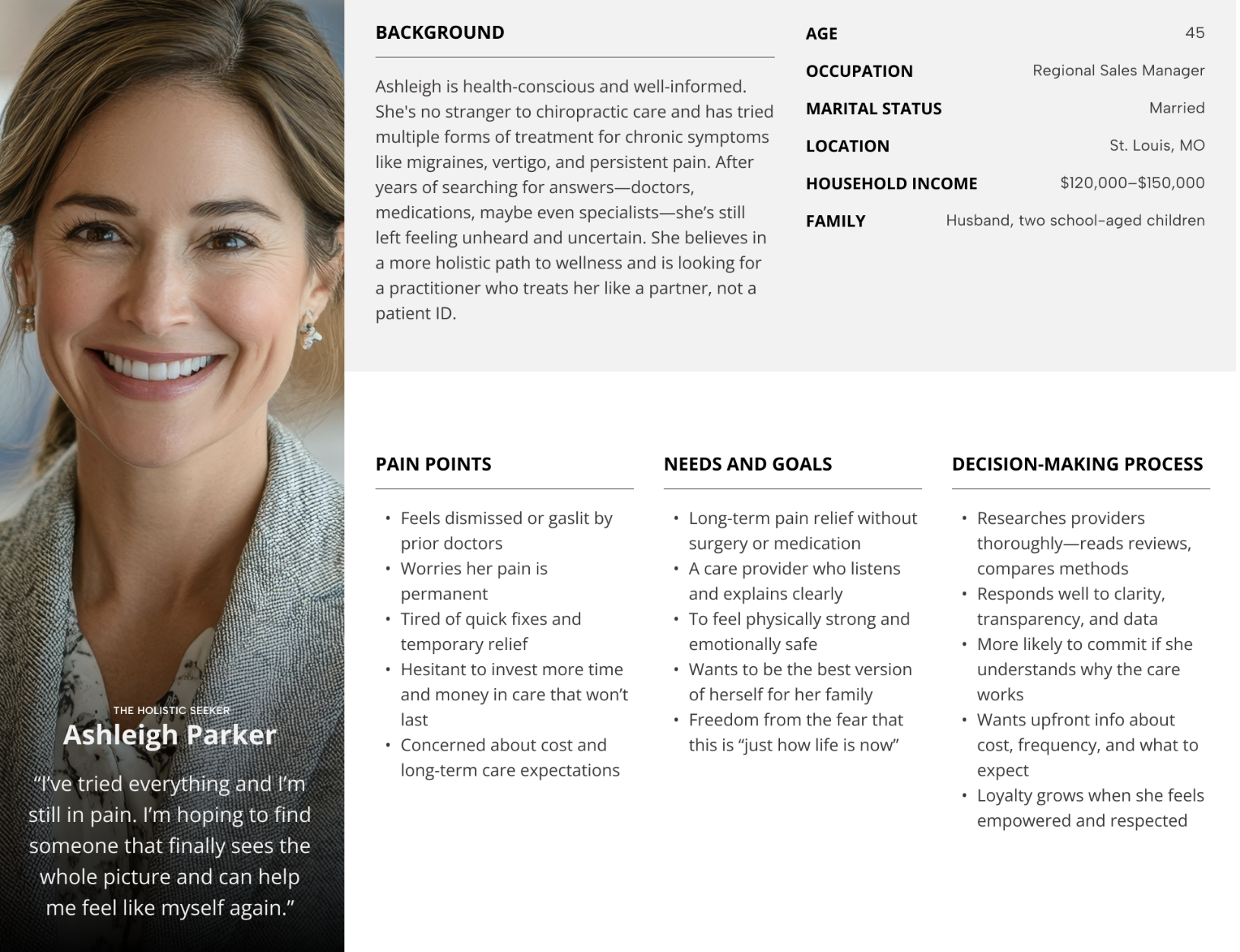
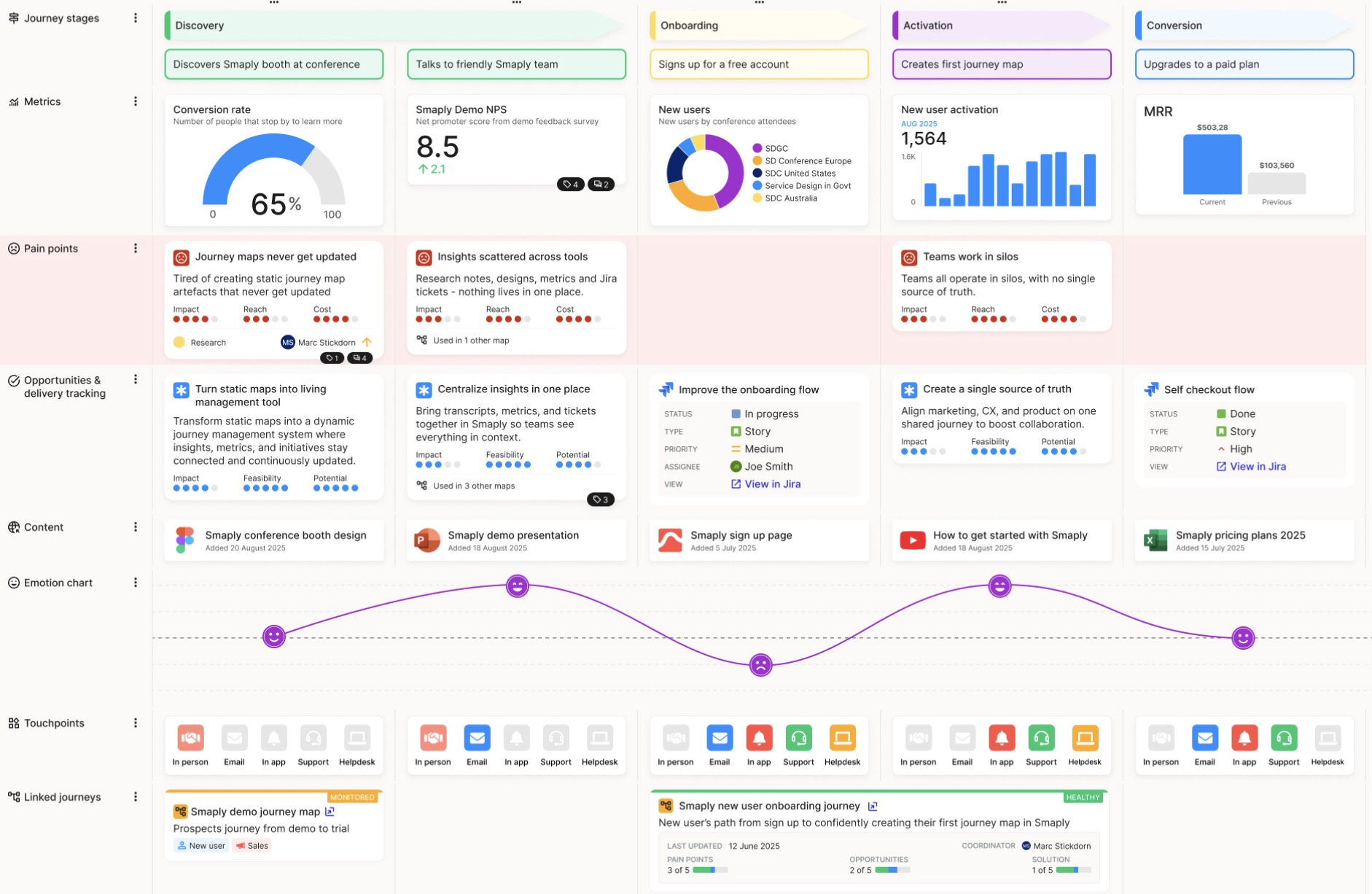
That means mapping the full customer experience, not just your marketing funnel, but the entire journey from the moment someone hears about you to whether they come back and tell someone else. It means identifying who your best customers actually are (not who you think they are, or who you wish they were) and understanding what makes them choose you. It means looking at where your brand promise and your customer’s actual experience don’t match, because those gaps are where you’re quietly losing leads, referrals, repeat business, and margin.
It also means being honest about what you find. The point isn’t to produce a document that tells you what you want to hear. It’s to produce clarity you can act on, what to fix first, what to build on, what to ignore, and what each move is worth.
Once you have that, everything else gets easier. The website redesign has a reason behind every page. The ad spend has a target that’s based on data, not assumptions. The content strategy serves a purpose beyond filling a calendar. You stop guessing and start building.
The Cost of Getting It Backwards
Here’s what the backwards version looks like in practice. A company spends $40K on a new website. It looks great. Traffic bumps for a month, then flattens. Conversions don’t move. They assume SEO is the problem, so they spend another $15K on that. Still flat. Someone suggests paid ads. Another $20K. Some leads come in, but they’re not the right ones, low margin, high maintenance, wrong fit.
Nine months and $75K later, the problem is exactly where it was: the company doesn’t have a clear understanding of who it’s for, what makes it different, or where the experience breaks down. Every tactic was reasonable in isolation. None of them were informed by the thing that would have made them work.
This isn’t a hypothetical. It’s a pattern we’ve seen dozens of times. And the frustrating part is that the money was there. It just went to execution before anyone mapped the terrain.
Strategy Isn’t a Phase. It’s a Foundation.
There’s a reason the best companies in the world don’t treat strategy as a one-time exercise. It’s not a phase you complete before the “real work” starts. It is the real work. Everything else is built on top of it.
When you know who your best customers are, you stop wasting budget on the wrong ones. When you can see where your brand promise and customer experience diverge, you can close gaps that are costing you money every single day. When you have a prioritized roadmap, ranked by impact and cost, with projected returns, you’re not guessing anymore. You’re making decisions with the kind of clarity that compounds over time.
Precision first. Then momentum.
That’s not a tagline. It’s how durable growth actually works. The companies that skip the map might move faster in the short term, but they end up circling back to the same questions eventually, usually after spending a lot more to get there.
How to Know You’re Ready
If any of this sounds familiar, you probably already know:
Your marketing is fine. It’s working, sort of, but you can feel the ceiling. You’re spending money but can’t quite connect it to growth that matters. You’ve outgrown the tactics that got you here but aren’t sure what replaces them. You know the business is capable of more, but something isn’t clicking.
“Fine” is dangerous. Not because it’s failing, but because it’s comfortable enough to tolerate and expensive enough to keep you stuck.
The companies that break through aren’t the ones with the biggest budgets. They’re the ones willing to look honestly at the full picture, and then make decisions based on what they find instead of what they assume.
That’s where it starts.
Ready to see your business the way your customers experience it? Let’s talk.